


How Deep Is Fiber Optic Cable Buried?



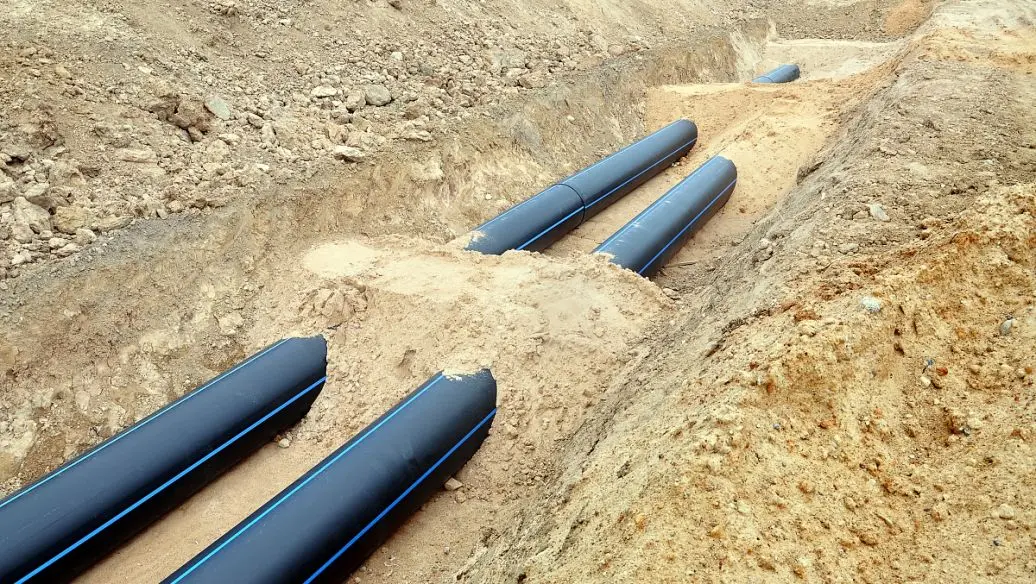
Fiber optic cables are typically buried at depths of 0.6-1.2 meters (2-4 feet), but there is no one-size-fits-all answer when it comes to fiber burial depth, as residential fiber drops may need to be installed much more shallowly, and some installations, such as backbone routes and road crossings, may require extra cover. The actual depth depends on local regulations, installation technique, the type of cable used, terrain, and needs of the network owner.
What Is Fiber Optic Cable Burial Depth?
By burial depth, engineers normally mean the vertical cover above the fiber optic cable or ducting, measured from the finished ground surface.
This is unlike the trench depth.
For instance, if a telecom project specifies 600 mm of burial depth, the cable cannot be placed at the bottom of the 600 mm deep trench. The bedding, the duct, and the fiber itself all need to be taken into account to calculate the necessary excavation depth.
Although it might appear to be a very minor thing to pay attention to, it can lead to problems during the installation phase if the construction team and the project drawings adopt different definitions of the term.
Typical Fiber Optic Cable Burial Depth
There is no standard burial depth, as each application has different protection requirements. Here is the list of approximate ranges of typical values, which can be used as a rough reference:
- Residential FTTH drops – 300-600 mm (12-24 inches);
- General buried distribution cable – 600-900 mm (24-36 inches);
- Backbone routes and other risky installations – 900-1,200 mm (36-48 inches);
- Road and highway crossings – usually deeper, depending on the road authority;
- Special applications – usually determined by the project specification, not a rule-of-thumb.
According to the Fiber Optic Association, a rough rule of thumb for burial depth is approximately 1 meter, while residential drops can sometimes be installed at depths of 300 mm, provided that the local requirements and conditions allow it.
What Determines Burial Depth?
Several aspects affect the recommended depth of installation of fiber optic cables.
1. Local Requirement
First of all, one has to consider the requirements of the authority that approves installation of such infrastructure.
Each telecom operator, local government, highway authority, or utility company may have its own standards that differ from common industry guidelines.
For example, requirements of USDA Rural Utilities Service provide dedicated standards for buried and underground telecommunications plant.
That is why, an installer should be sure that the approved construction drawings correspond to the local requirements.
2. The Environment of Installation
Obviously, an installation of a cable under the lawn is faced with completely different challenges than the same installation under the highway.
Common aspects include:
- Loading by vehicles
- Agri-machinery
- Potential excavation
- Drainage and erosion
- Frost heaving
- Ground movements
- Existing utilities
- Soil and rock condition
- Construction activity
A deeper installation provides more physical protection, but the depth cannot be increased infinitely because of increasing excavation costs and limited underground space due to other utilities.
3. Direct Burial vs. Conduit
In addition, the installation method is quite important as well.
Direct buried fiber optic cables are made especially for underground installation. Depending on the project, they may contain reinforced jacket, armor, water-blocking technology or other constructions.
Installation of fiber within a conduit or duct allows receiving the extra mechanical protection and facilitates further maintenance and replacement.
Selecting the Right Cable for Burial
Burying the cable deep does not always mean that a reliable underground fiber system will be provided.
The cable has to be able to operate in the existing environment. Some essential features of the cable for a direct burial may be:
- Waterproof to protect against water intrusion.
- Crush-resistant to endure soil pressure and mechanical loads during installation.
- Tensile strength for installation.
- Resistance to rodents in case of their presence.
- Ability to withstand temperature changes in case of their presence.
- Proper outer sheath materials for outdoor use.
Thus, there can be a use of armoring for additional protection in the case of a direct-buried application, and proper structures of the cable are recommended for different underground environments.
What about FTTH Fiber Drops?
FTTH installations differ greatly from the long-haul backbone lines.
For instance, a relatively short drop line, crossing a private residential yard, may be laid at a rather shallow level if allowed by the local requirement. In some residential fiber drops, the Fiber Optic Association provides approximately 1 foot (30 cm) as an example, while the deeper burial may be common for outside-plant routes.
However, it would be wrong for homeowners to think that all fiber drops may be reliably buried at this level.
Approach of Huijue Network on Fiber Cables Projects
According to our view, the trench depth has to be considered in conjunction with the cable construction, the nature of the path, and the installation method.
For example, just digging deeper trenches would not address the issue if the chosen cable was not meant for direct burial or lacks sufficient protection against moisture. At times, installation using protective conduits might offer a more flexible solution even if direct burial is feasible.
Regarding the construction of fiber optic networks, we suggest verifying the following items prior to the construction process:
- Minimum required cover
- Direct burial vs. installation in conduit
- Type of cable and number of fibers
- Nature of soil and environmental conditions
- Crossing of roads or railways
- Separation from other utilities
- Use of warning tape and markings
- Maintenance requirements
Final Notes
In any case, how deep should fiber optic cables be buried? While for conventional underground telephone networks, 600–1,200 mm (24–48 inches) may serve as a generic reference, residential drops are usually buried shallower.
The most prudent course of action for network operators and contractors is to ascertain the necessary cover and then choose the appropriate fiber optic cable and installation method. This will help find an optimum compromise between physical protection, installation cost, and reliability of the network over time.
Huijue Network offers fiber optic cables as well as FTTx-related products for telecom network application.
 Hot Article

Founded in 2002, Huijue Networks is a high-tech service manufacturer integrating intelligent network communication equipment and an integrated application of computer intelligent network communication systems.
Set a Consultation Today